Choosing the right mortgage is one of the most important financial decisions you’ll make when buying a home. One of the first questions many homebuyers ask is whether they should choose a fixed mortgage rate or a variable mortgage rate.
Both options have their own advantages and potential drawbacks. The right choice depends on your financial goals, comfort with risk, and long-term plans.
If you’re unsure which mortgage type best suits your needs, our Current Mortgage Rates page can help you understand today’s lending landscape before making a decision.
A fixed mortgage rate remains the same for the entire term of your mortgage. Whether your term is one, three, or five years, your interest rate won’t change during that period.
This means your monthly mortgage payments remain predictable, making it easier to budget and plan your finances.
A fixed mortgage is often preferred by buyers who value stability and want protection from rising interest rates.
For many first-time homebuyers, a fixed-rate mortgage provides confidence during the early years of homeownership
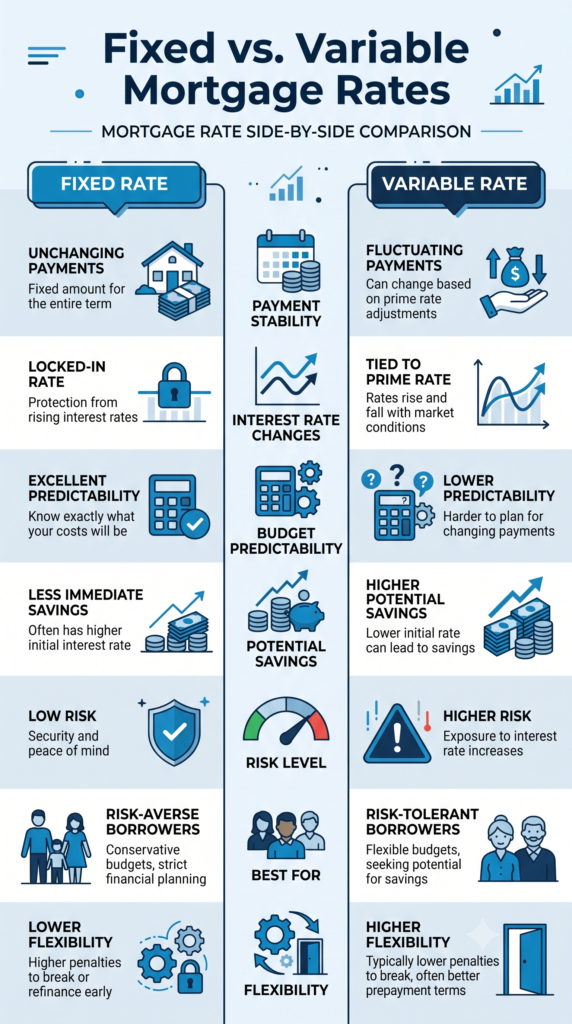
A variable mortgage rate changes based on the lender’s prime lending rate. If interest rates increase, your borrowing costs may also increase. If rates decrease, you may benefit from lower borrowing costs.
Variable mortgages often appeal to buyers who are comfortable with some uncertainty in exchange for the possibility of long-term savings.
Although market conditions change over time, many borrowers appreciate the flexibility that variable-rate mortgages can offer.
A fixed-rate mortgage may be the right choice if you prefer financial stability.
Some key advantages include:
If you have a fixed monthly income or prefer knowing exactly what you’ll pay each month, this option may provide additional confidence.
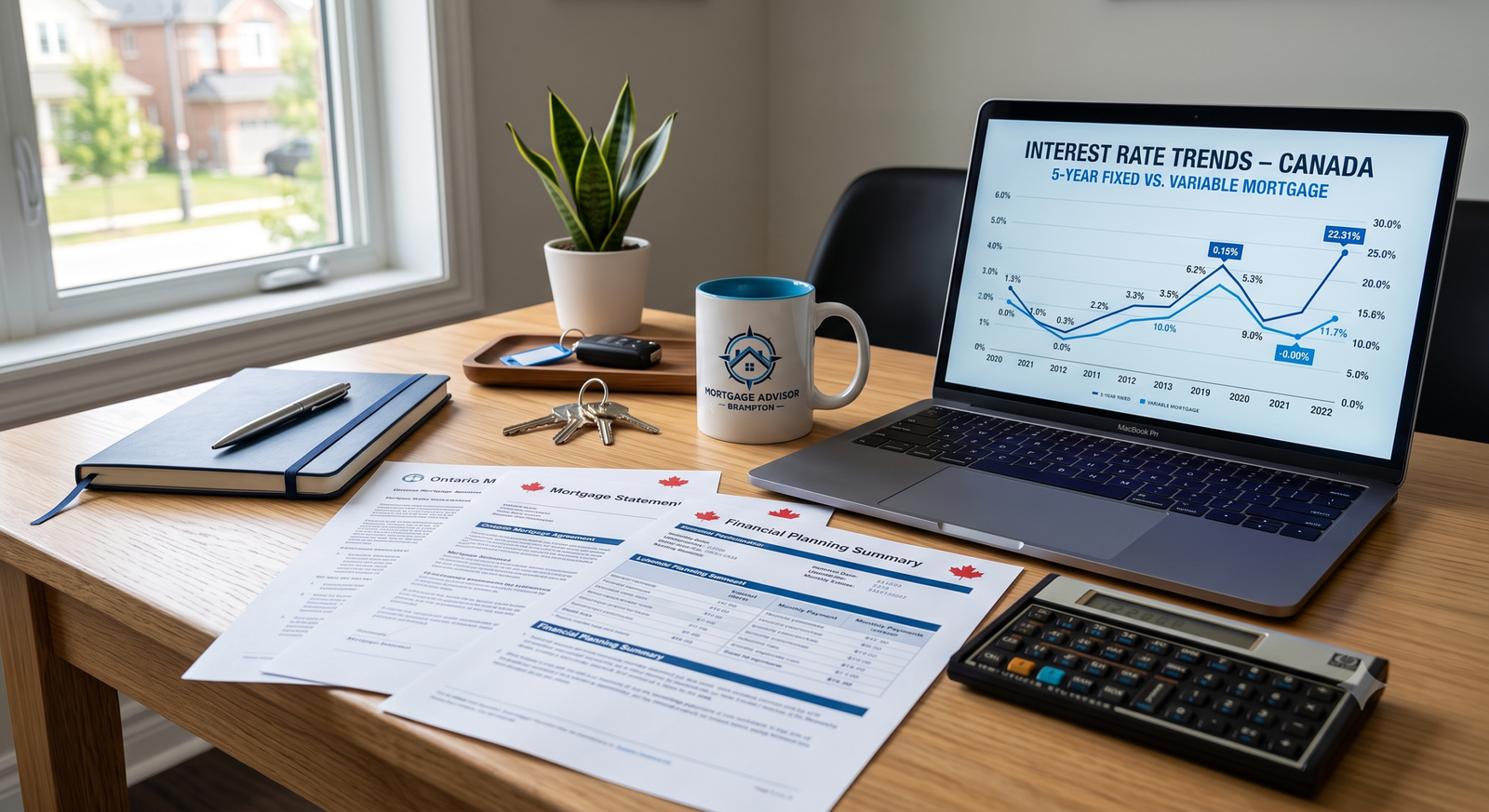
Variable-rate mortgages may be suitable for borrowers who are comfortable with changing market conditions.
Potential advantages include:
Since every financial situation is different, it’s important to understand how changing interest rates could affect your monthly payments before choosing this option.
Before selecting a mortgage, ask yourself the following questions:
Answering these questions can help narrow down which mortgage option better aligns with your lifestyle.
You can also use our Mortgage Payment Calculator to estimate how different mortgage rates may affect your monthly payments.
Many first-time buyers choose fixed-rate mortgages because predictable payments make budgeting easier.
However, every buyer’s situation is unique.
Income stability, future financial plans, and overall comfort with risk should all be considered before making a decision.
If you’re purchasing your first home, you may also find our First-Time Home Buyers guide helpful.

Your mortgage decision doesn’t end after purchasing your home.
When your mortgage term expires, you’ll need to decide whether to renew your mortgage or explore new financing options.
Understanding how mortgage renewals work today can help you make informed decisions in the future.
Learn more on our Mortgage Renewals page.
Rather than focusing only on today’s interest rate, consider your overall financial picture.
A mortgage should support your long-term goals—not just your current situation.
Using online tools can help you better understand different mortgage scenarios before speaking with a mortgage professional.
Explore all of our Mortgage Calculators to compare payment options and better understand your borrowing capacity.
There isn’t a single “best” mortgage for everyone.
A fixed mortgage offers stability and predictable payments, while a variable mortgage may provide greater flexibility and potential savings depending on market conditions.
The right choice depends on your financial goals, comfort with changing interest rates, and future plans.
Speaking with an experienced mortgage broker can help you compare your options and choose the mortgage solution that best fits your needs.
If you’re ready to explore your mortgage options, we’re here to help.
Whether you’re buying your first home, refinancing, renewing your mortgage, or simply comparing your options, personalized advice can make all the difference.
Contact Rinku today for expert mortgage guidance tailored to your financial goals.
For additional information, visit these trusted resources:
Disclaimer: The information provided in this article is for general educational purposes only and should not be considered financial, legal, or mortgage advice. Mortgage rates, lending requirements, and market conditions may change over time. Please consult with a qualified mortgage professional to discuss your individual financial situation before making any mortgage decisions.